- 5728 East Lake Sammamish Parkway SE Issaquah, WA 98029
- 425.392.3631
- sales@issaquahlumber.com
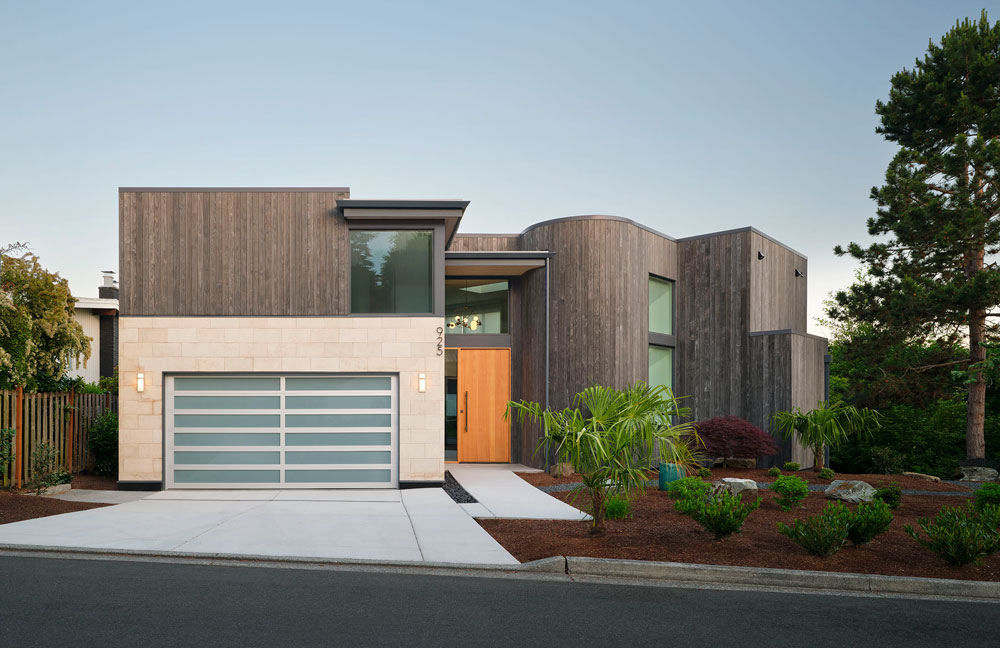
On a quiet cul-de-sac east of scenic Lake Washington, this late-1980s home reflected West Coast regional modernism, with curved forms, angled volumes, and a subtle nod to the Sea Ranch design of Northern California. Having lived in the Bay Area, the homeowners agreed that a natural approach to amplifying the Sea Ranch style was appropriate for the project, as it truly shaped the home’s final aesthetic.
Residential
Location: Kirkland, Washington
Architect: Paul Michael Davis PLLC, Seattle, WA
Builder: DME Builds, Bellevue, WA
Supplier/Custom Milling: Issaquah Lumber
Siding: Accoya® Color Grey, installed on the GRAD System
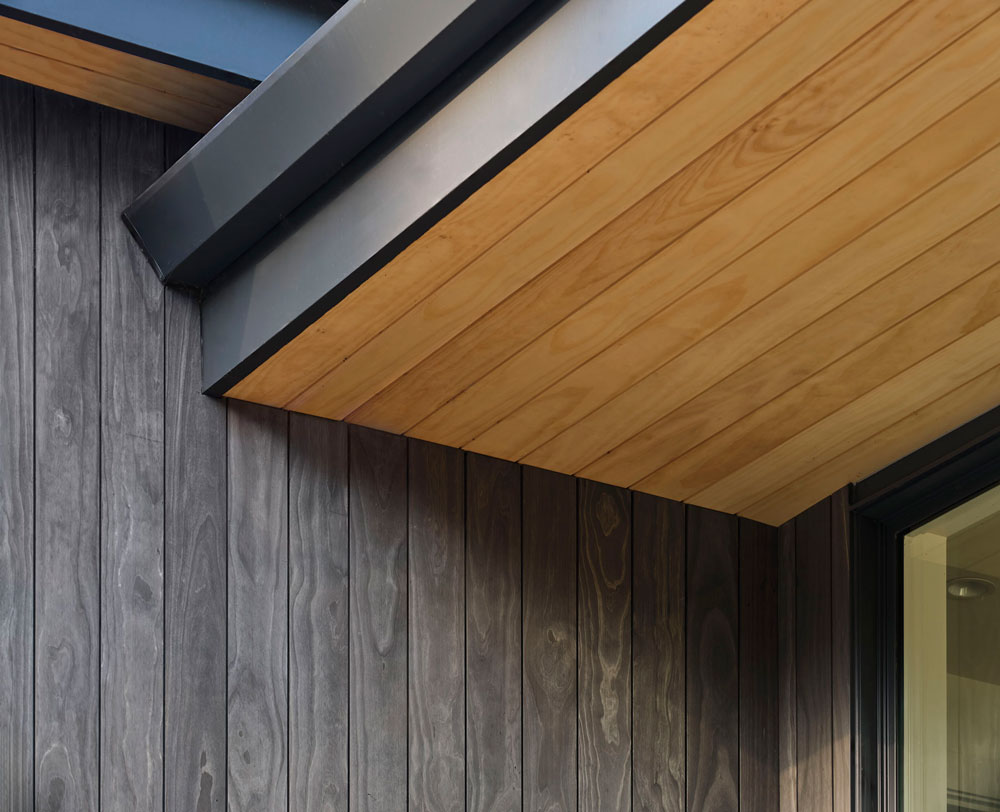
Soffits: Accoya® Natural
Photography: Aaron Locke
The design was intentional: a focus on contrast for the inside and outside.
The homeowners began exploring fresh siding options shortly after purchasing the home, realizing the existing wood was on its last leg. Years of neglect had taken their toll; the original wood was unpainted, weathered, and marred by poor drainage. Animals had even claimed the façade, with evidence that bats had quietly made long-abandoned homes in gaps that had widened beneath the eaves.
“We wanted materials that would be resilient and age gracefully without requiring constant maintenance.”
- The homeowners
Because the painted vertical wood siding had reached the end of its life, it was decided to replace it as a long-term decision rather than a quick fix. Built into a gentle slope, the house appears as two stories from the street and three from the rear, so future painting or staining would require scaffolding every few years.
“Over the course of 15 years, you’re going to have two to three scaffolding projects to maintain a traditional wood siding product, and that doesn’t include materials or labor,” said the homeowners.
The recently retired homeowners spent close to two years researching natural materials that aligned with the original architect’s ideals, ranging from cedar-plank siding to engineered lumber and wood-alternative options. About a year into that search, Chad Amble, owner of Issaquah Lumber, introduced the homeowners to Accoya.
When Chad heard that one goal was a façade that would grey and patina like the Sea Ranch homes the owners admired, he pointed them to Accoya Color Grey, milled with the color running through the board so it remains grey from the first day and continues to silver over time. The homeowner brought the product to his architect, Paul Michael Davis, and builder, DME Construction, and the team built around it.
“We don’t always get to be involved in projects from the design phase through finish,” said Chad Amble, owner of Issaquah Lumber. “When the homeowners came in, initially they were looking at a different product; after listening to what they wanted the final look to be and the installation challenges they were going to have, it was easy to recommend the Accoya Color Grey on the GRAD System rail.”
“We were all drawn to Accoya’s grey color because it was a lovely way to get the weathered, beachy Sea Ranch look right away,” said Paul Michael Davis, owner of Paul Michael Davis Architects. “There’s no dramatic in-between phase, none of the awkward weathering you get with cedar.”
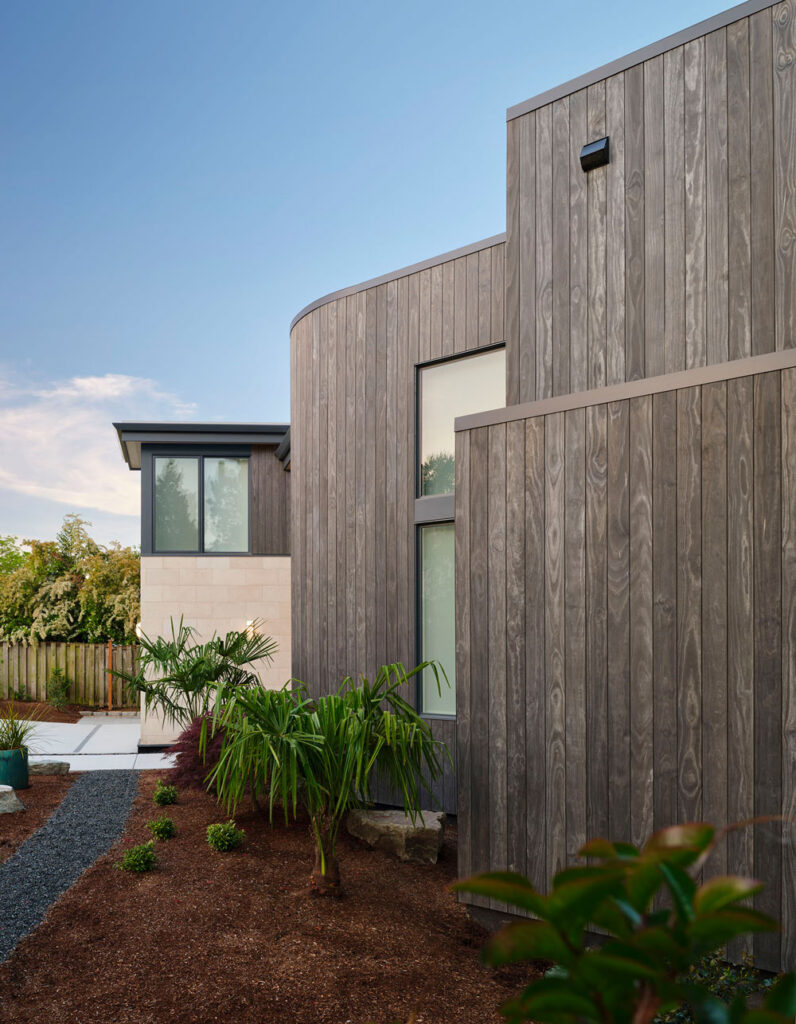
“It was helpful to see the Redmond Senior and Community Center and how they handled the bottom finish of the siding,” said the homeowner. The center is also clad in Accoya, supplied and custom-milled by Issaquah Lumber.
Because of the rain and harsh Pacific Northwest weather, it was clear to the homeowner that a painted vertical siding wasn’t the answer. The partnership with Issaquah Lumber was important here. The GRAD System was integral, serving as an advanced rainscreen system designed in collaboration with RDH Building Science, a building envelope consultant.
GRAD was new to the DME crew, and Superintendent Derrick Olson is candid about the learning curve. “It was a lot of trial and error,” he said. “The GRAD system is nice once it’s figured out, but there’s quite a bit of time and effort up front. Understanding exactly how the layouts need to go, how it works with the core vent and the drainage behind it.”
The install itself is straightforward once the rails are dialed in. Each pin on the micro-rails had to be aligned vertically, and the crew worked out their drainage approach before starting, setting the boards off the wall to allow airflow and control moisture behind them. This is a detail that matters in the damp Pacific Northwest. “Once we had that figured out, that was our good starting point,” Derrick said. Throughout milling, the team coordinated closely with Chad and the Issaquah Lumber crew to keep the layout aligned with the product’s needs.
“We have worked with DME over the years; this has been one of the cooler projects we have done with them,” said Amble. “We really appreciate when contractors are willing to look outside the box to learn new technologies and products; DME did an exceptional job on the installation utilizing the GRAD Rail system.”
“Issaquah Lumber is always in our toolbox. Over the last 30 years of doing business, we’ve always counted on them — always one-offs, and always successful.”
- DME Construction
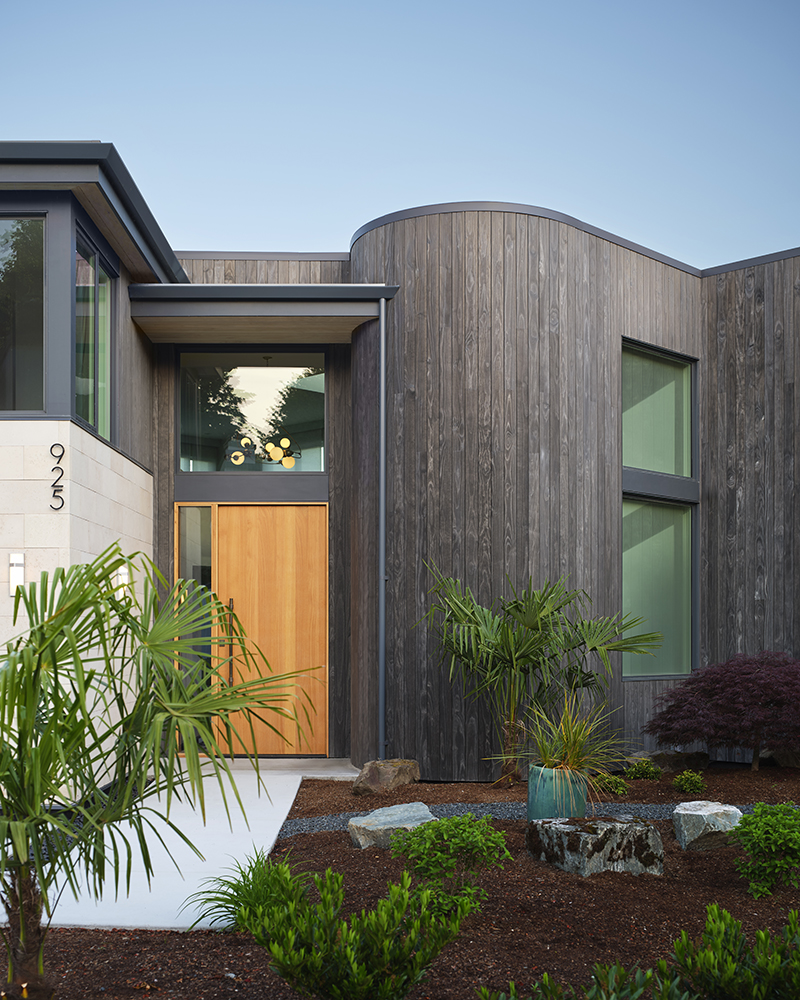
The home’s signature is a large radius that wraps the front stair volume. The owners fondly call it “the turret,” with few roof lines and almost no overhangs to hide behind. Carrying a flat siding product around that curve was, in Derrick’s words, a big win. “It really makes the project stand out, and it shows what the product is capable of,” said Derrick. “It doesn’t have to go on a flat, straight wall. We can make it work on anything.”
Issaquah Lumber custom-milled the radius profiles so each board wrapped the turret and seated cleanly on the track. As the homeowner put it, “It was as if the circumference of the turret was tailored to the tolerance of the Accoya and the GRAD clip system.”
“Accoya on the GRAD System gave the homeowners the desired look and maintenance, along with a simplified installation,” said Amble. “The turret really showcases the flexibility you have with the GRAD System.
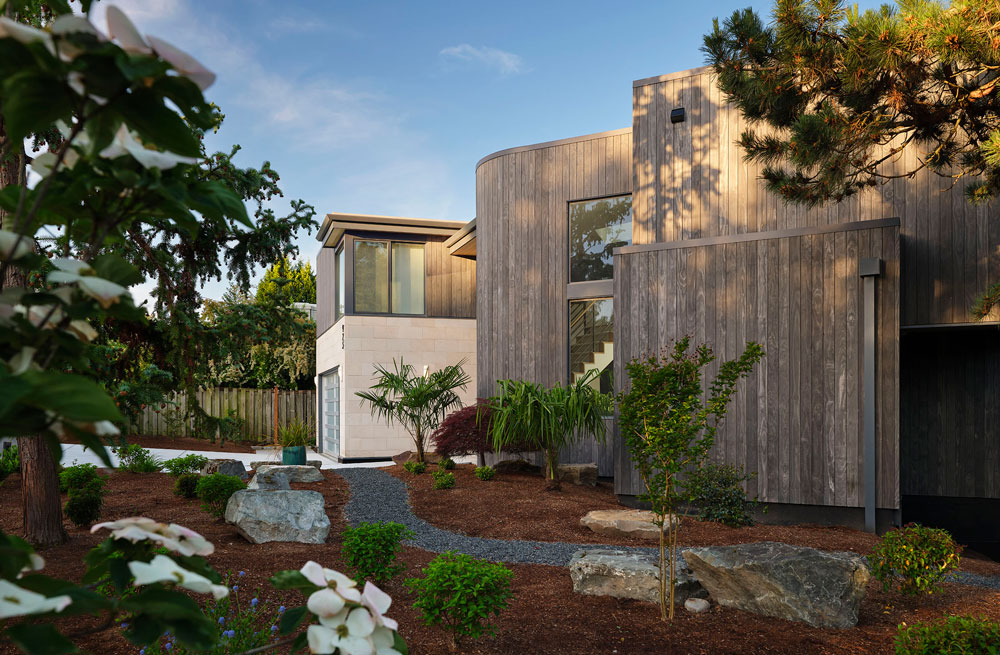
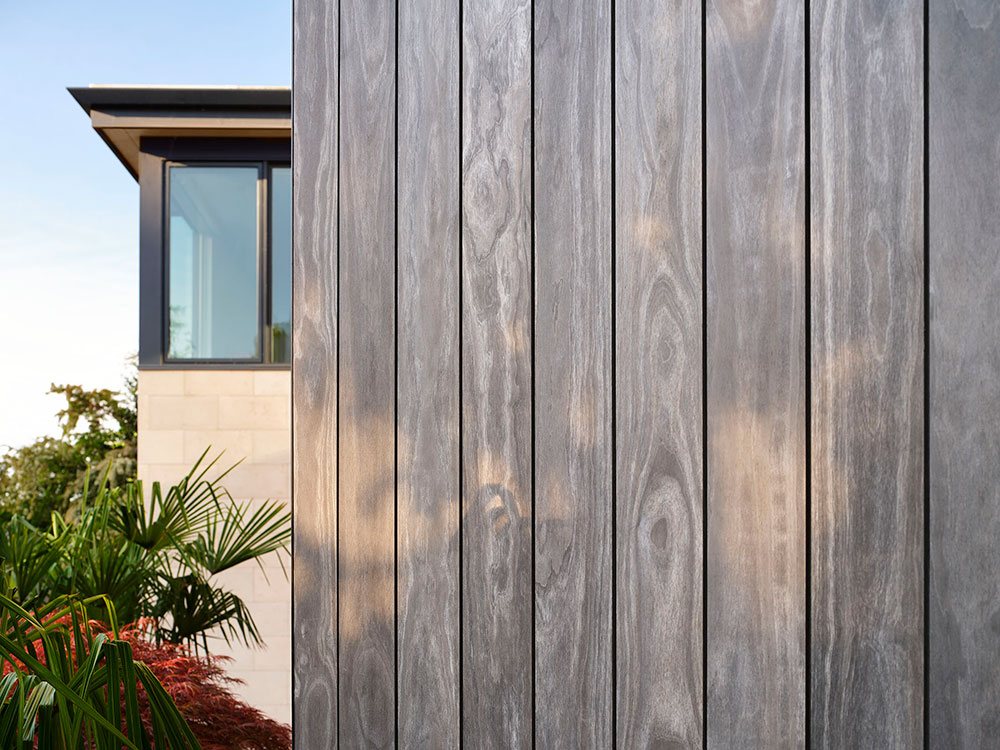
The Accoya siding also had to marry cleanly to other materials: a light-colored El Dorado Stone base at the garage and entry, James Hardie fiber cement at the rear, and the flashing details between them. With Davis’s detailing and a building-envelope consultant on the flat-roof-and-parapet assembly, that coordination went smoothly. “There wasn’t a lot of headache marrying the fiber cement to the Accoya, and the same around the stone,” said Derrick. “Paul made our job pretty easy in that respect.”
To contrast with the grey, the team used Accoya Natural on the front-entry overhang soffits and the rear soffits, which will naturally silver over time.
For a builder, material consistency is its own reward. The Accoya boards ran straight and true, with little of the twist or cupping that comes with other species. “We’ve done projects with pre-finished cedar where you order 15 to 20 percent more just to get the right boards,” DME noted. “We didn’t have to do that here. That’s why it’s worth paying a little more.”
The crew’s favorite detail was the color. Because Accoya Color Grey carries its tone all the way through the board, cuts and fitting around flashing didn’t mean bringing painters back to touch up. “Everything is true to its form and true to its color,” Derrick said. “Every time we made a cut to fit the flashing details, we didn’t have to go back and stain. That was a big asset.”
And it should stay that way. “It looks timeless,” Derrick said. “Ten years from now it’ll look the same as it does today, where other products weather and change. This will stick to the weathering plan built into the Accoya product.”
For the homeowner, the proof is in how little the siding asks of him. “It looks as good today as the day it was installed,” they said. Living near the lake brings hawks and eagles to the property, and on the rare occasion they leave a mark, “it’s a quick scrub with a wet brush, and it’s taken care of,” they added. “For us, that’s the indicator we made the right choice. A low-to-no maintenance, stability, and resilience.”
The math sealed it. “When I looked at the cost of maintaining cedar — staining, painting, the scaffolding, combined with the rising cost of trades, my thinking was the Accoya pays for itself in about ten years.” He has also become an advocate for the install method: “My hope is that as more contractors get familiar with the GRAD System, they’ll find it’s more efficient and less expensive on labor to install.”
"Chad was a great partner. He has incredible patience, and he and his staff were helpful and knowledgeable through every part of the process."
- The homeowners
All the research up front landed in the right place. “Taking the time to go through all that and giving the people making the decisions the flexibility to pause and get the right answer is pretty cool in how it ended up,” DME said. “We were all in 100 percent agreement that we found the right product.”
Custom milling the Accoya for this home, including the radius profiles that made the curved stair wall possible, is the kind of work that has anchored Issaquah Lumber’s relationships with Pacific Northwest builders for decades.