Picture a room that feels immediately right: exposed timber beams, a cedar-clad wall, or wide-plank hardwood floors that anchor the space. There’s a deeply basic comfort in being surrounded by natural materials. Such instinctive ease isn’t nostalgia nor merely aesthetics—it’s biology.
Science calls this instinct biophilia. As the demand grows for places that feel good, function well, and endure, wood leads the forefront of the movement.
At Issaquah Lumber, we’ve been immersed in the Pacific Northwest forests and the people who build with them for over 135 years. What we’re seeing today is the clearest articulation yet of something we’ve always known: wood isn’t simply a building material. It’s a human one.
What Is Biophilic Design?
The term biophilia — meaning “love of life” — was popularized by biologist E.O. Wilson in the 1980s. He used it to describe what he saw as humanity’s innate, evolutionarily rooted affinity for other living systems and the natural world. We spent hundreds of thousands of years in direct relationship with nature before we ever built a wall or a roof. That history is written into our neurology.
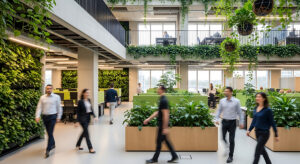
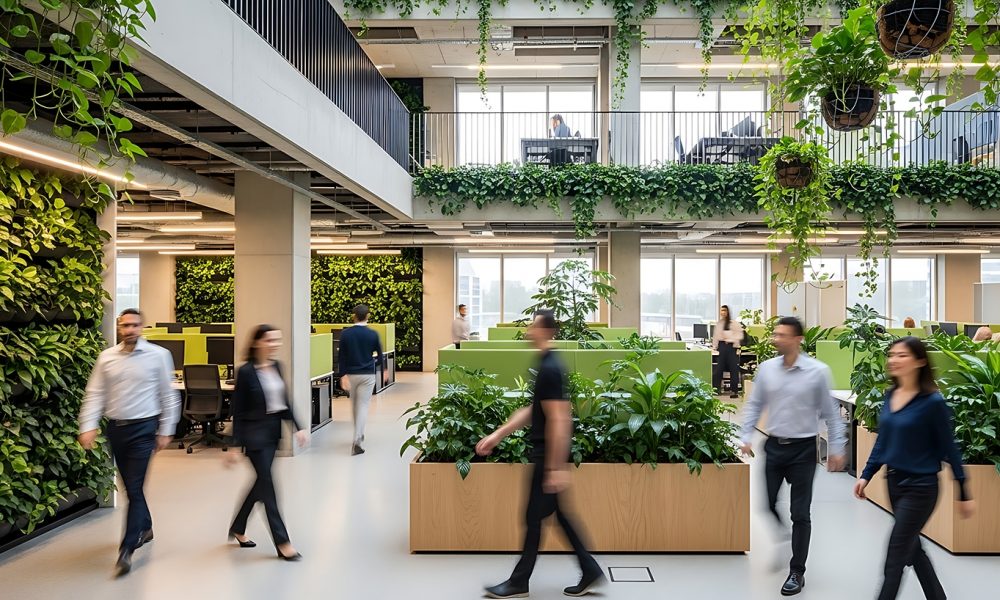
Biophilic design translates this science into architecture and interiors. It’s a discipline that intentionally incorporates natural light, organic textures, living systems, natural materials, and views of the outdoors. The purpose is to support human health, well-being, and performance. It’s not decoration; it’s design with a purpose grounded in how people respond to the built environment.
The research backing it is substantial. Studies have shown that exposure to natural materials in the workplace reduces stress and improves focus. Healthcare environments that incorporate wood and natural light see measurably better patient results. Schools designed with biophilic principles show increased student engagement and lower absenteeism. The wellness, hospitality, and residential design sectors have all taken notice — and biophilic design has moved from a niche philosophy to a mainstream imperative.
"Research consistently confirms what E.O. Wilson proposed in 1984: humans have an innate drive to connect and interact with nature — and biophilic design is how we honor that in the built environment."
Why Wood Is the Foundation of Biophilic Design
Among all the materials available to designers and builders, wood occupies a singular place in biophilic design. Not because it’s traditional, though it is. Not simply because it’s renewable, though that matters deeply. But because wood communicates “nature” in ways that no synthetic material can replicate.
Wood carries warmth — a tactile, thermal quality that makes a space feel inhabited rather than assembled. Its grain patterns are infinitely varied, never repeating, always organic. It has a scent that triggers memory and calm. It absorbs and reflects light differently throughout the day, giving rooms a sense of life. And because wood comes from something that grew, it carries a kind of biological familiarity that resonates with us below the level of conscious thought.
Architects and designers often describe wood as their first instinct and their most versatile tool. It works in minimalist, contemporary spaces as readily as in traditional or rustic ones. It connects indoor and outdoor environments. It complements mixed materials, like glass, steel, and stone, well. And here in the Pacific Northwest — a region defined by its lofty forests, its relationship with rain and tide, its firmly established reverence for the natural world — wood in design doesn’t just feel right. It feels like home.
Modified Wood: Biophilic Design Unites Contemporary Advancement
Over the past twenty years, a new category of materials has emerged that offers something authentically remarkable: all of the sensory and aesthetic qualities that make wood the foundation of biophilic design, combined with greatly enhanced performance, durability, and sustainability. This is modified wood — and it’s changing what’s possible.
Modified wood starts (and remains) as real wood, often from fast-growing, responsibly sourced species like radiata pine, ash, southern yellow pine, spruce, or hemlock. It goes through processes that alter its cellular structure, greatly increasing its durability, dimensional stability, and resistance to moisture, rot, and insects. These modifications are physical or chemical, not synthetic; the result still remains wood, just transformed.
There are three primary modification methods, each producing distinctive results:
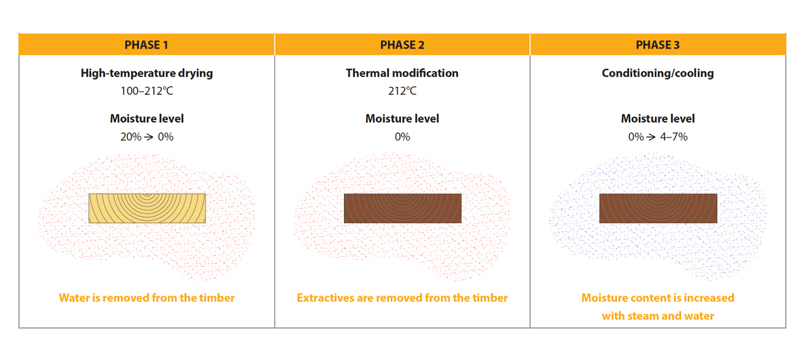
Thermal Modification uses heat and steam in a controlled kiln environment to restructure the wood’s cells, making it water-repellent and far more resistant to decay. ThermoWood, a method developed by the International ThermoWood Association, follows a similar process, but producers adhere to its rigorous standards and procedures.
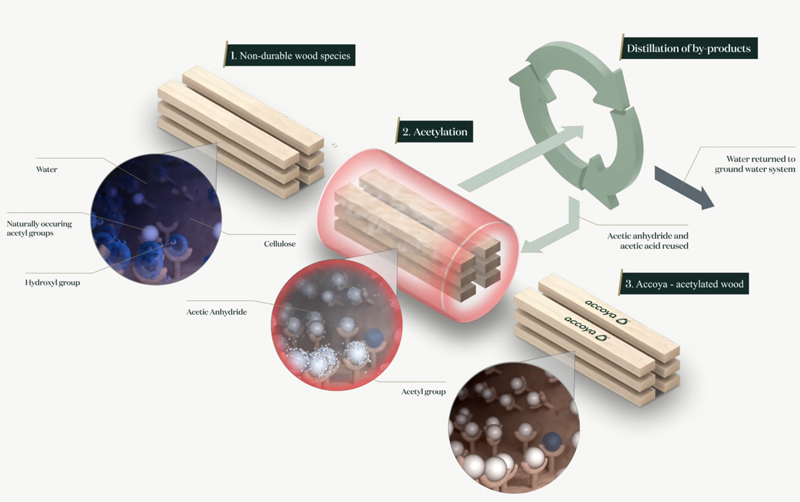
Acetylation operates at the molecular level, using acetic anhydride to alter the wood’s hydroxyl groups so the wood can no longer absorb water. The result is extraordinary dimensional stability and resistance to decay, humidity, and even termites — ideal for coastal environments and high-moisture applications.
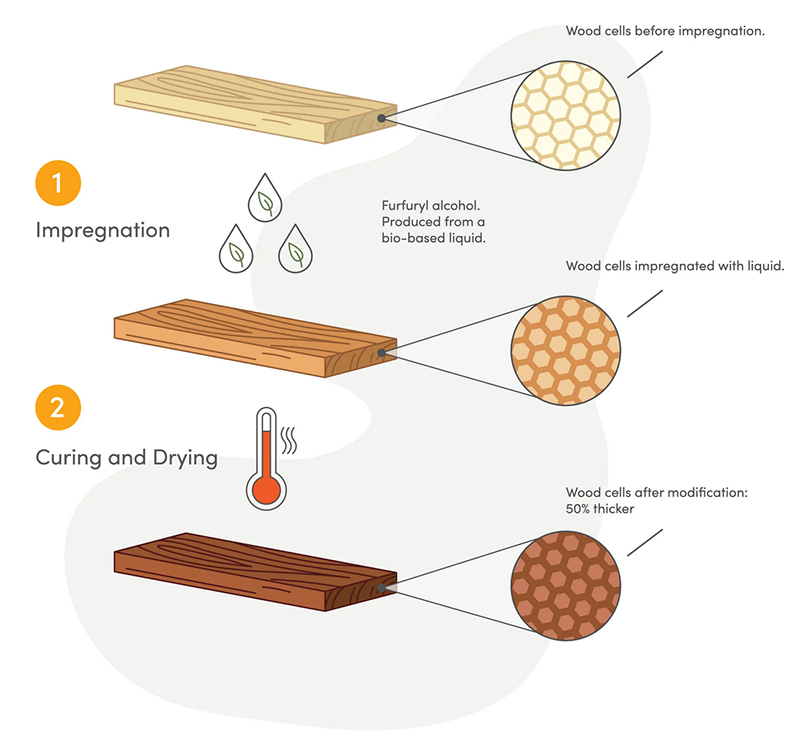
Furfurylation infuses wood with furfuryl alcohol, a bio-based resin derived from agricultural byproducts. The process densifies and strengthens the wood, similar to tropical hardwoods, without the sourcing concerns.
"Modified wood is still wood. It carries all the warmth, texture, and character that makes biophilic design work — with the durability that modern projects demand.”
Where Modified Wood Works: Interior and Exterior Applications
One of the most impressive features of modified wood is its range of uses throughout the building envelope. Whether you’re specifying for a protected interior or an exposed exterior, there’s a modified wood product made to perform.
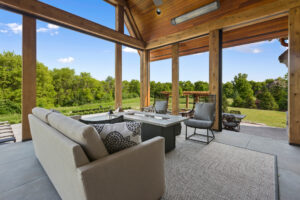
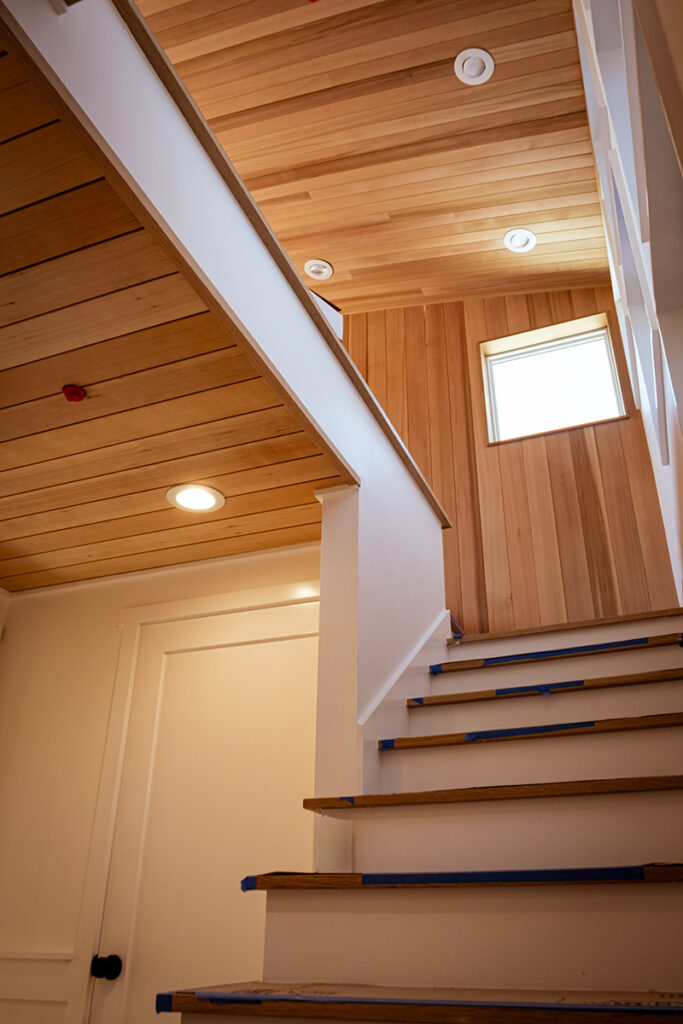
Interior applications include accent walls and paneling, ceiling systems, custom millwork, flooring, staircases, mantels, and architectural trim. The warmth and grain of the wood bring the biophilic experience indoors that feels refined and intentional. Dimensional stability assures these products resist expansion and contraction, which can affect traditional wood in climate-controlled settings.
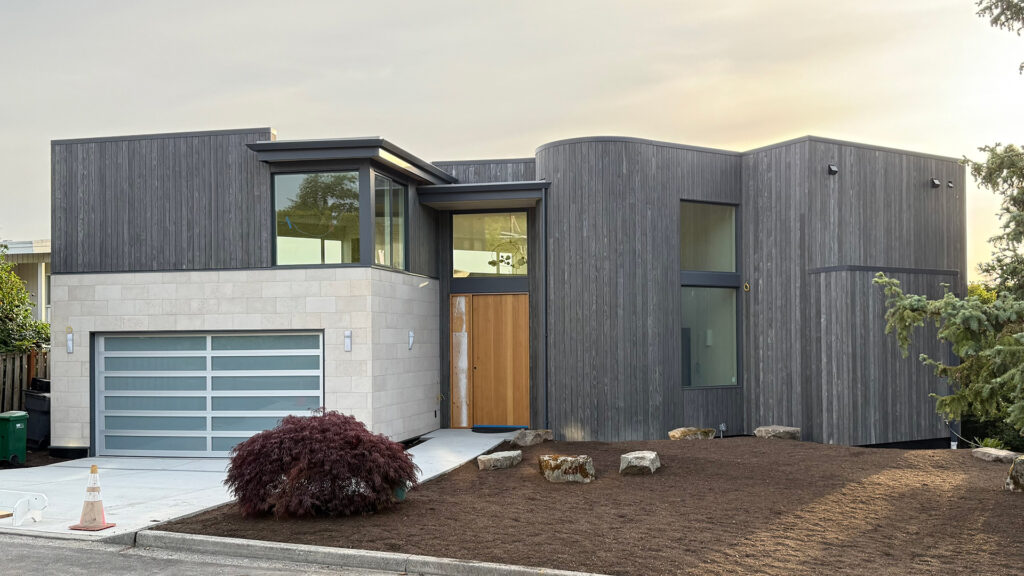
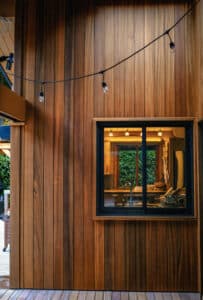
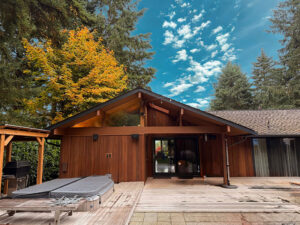
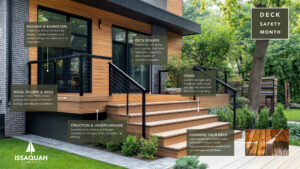
Exterior applications are where modified wood genuinely distinguishes itself from traditional alternatives. Siding and cladding, decking, pergolas, outdoor furniture, doors and windows, landscaping structures, and fencing are all excellent candidates for modified wood products.
Several manufacturers back their products with warranties of up to 20 to 50 years, a statement of confidence that no untreated wood species can match.
For the Pacific Northwest specifically, where moisture, temperature cycling, and biological pressure are relentless, the performance advantage of modified wood is not incremental. It is transformative.
Sourcing That Suits the Design Philosophy
Biophilic design is, at its core, a philosophy of relationship to the natural world. This is why sustainable and certified sourcing is not an add-on for us; it’s foundational.
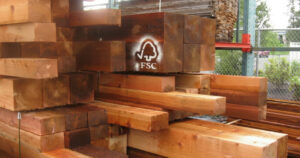
Issaquah Lumber holds the FSC Group Chain of Custody Registration certificate, which means the forest-based materials we supply are tracked and verified to meet the Forest Stewardship Council’s strict standards. The FSC framework assures responsible forest management by protecting biodiversity, supporting communities, and maintaining forests as sustainable, renewable resources.

Modified wood reinforces this commitment in a powerful way. Because modification processes can transform fast-growing, readily renewable species into materials that outperform slow-growing tropical hardwoods, reducing pressure on the very forests that are most at risk. The result means a deck board can last 30 to 50 years, rather than 10 to 15, which represents dramatically less resource consumption over time.
The Issaquah Lumber Perspective
We’ve spent 135 years building relationships with the forests, mills, and craftspeople who make great wood products possible. When modified wood began appearing as a serious category in Europe, we paid attention. When the performance data and the design community’s enthusiasm pointed clearly in one direction, we invested in products, expertise, and the capacity to serve customers who want the best.
Today, when we talk to an architect about a challenging spec, or a builder walks into our showroom looking for a material that will hold up in a coastal application, or a homeowner wants to create a deck that will still look beautiful in 20 years, we have answers. Not just products, but knowledge about which modification method suits which application, which species works for which aesthetic, and which system (including the innovative Grad hidden-clip installation system) will make the installation as impressive as the material.
Biophilic design asks us to build environments that reconnect people to nature. Modified wood gives us the most honest, most durable, and most beautiful way to do exactly that.
Ready to Bring Biophilic Design to Life?
Whether you’re an architect specifying for a high-performance project, a builder looking for materials that differentiate your work, or a homeowner investing in a space that will stand the test of time, we’d love to help. Visit our showroom, explore our modified wood portfolio, or connect with our team. Let’s build something outstanding together.
Learn more about Biophilic Design:
International Biophilic Products Association
Biophilic Design Institute
Living Future Biophilic Design Initiative