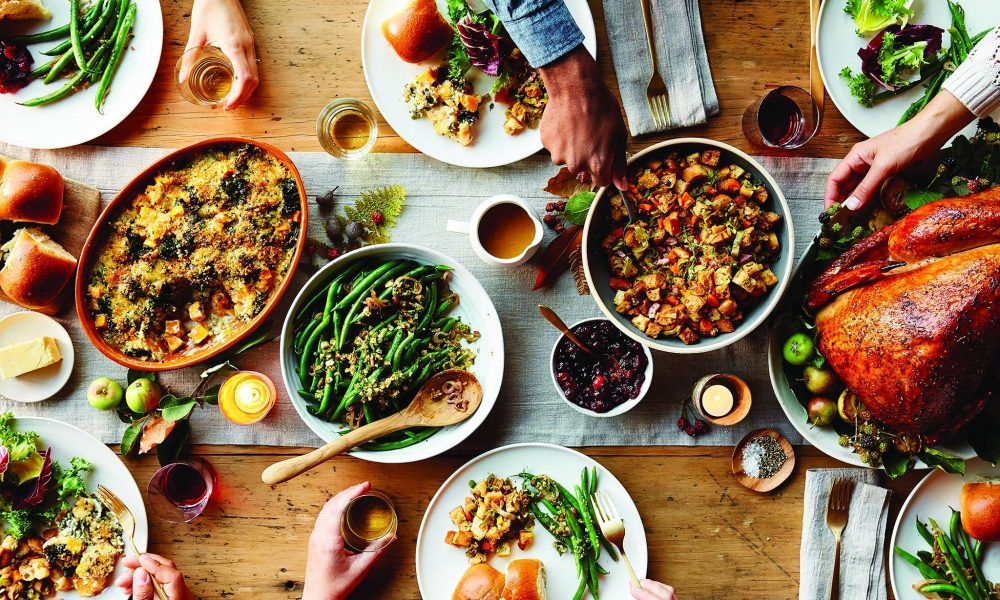
Oven-roasted.
A familiar tradition and, depending on where you live, a way to stay warm and toast in the kitchen. The result is typically a golden skin and drippings for gravy. The tradeoff is having enough oven space for the sides. Unsure of how to roast in the oven? Check out Butterball’s roasting guide to ensure a juicy result.
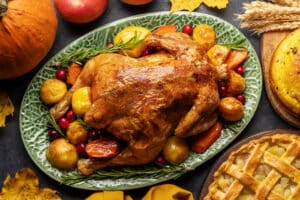
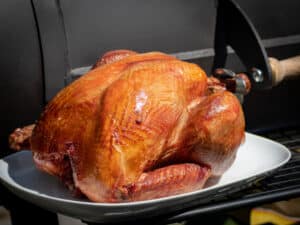
Smoked.
For the cook who likes an excuse to get outside and away from the fray, try a smoked version. You’ll need plenty of time outside to control the temperature and time. We recommend using wood sold for food smoking, such as apple or cherry. Keep lumber scraps, especially treated, painted, or glued wood, out of the cooker. We trust Weber’s pellet grill guide for the best smoked turkey results.
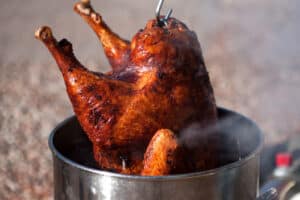
Deep-fried.
If you like crisp skin and aren’t timid about the safety aspect, we think deep-frying is where it’s at. Safety is essential. For an outdoor propane fryer, use level ground away from buildings and decks. Fully thaw and dry the bird, follow the equipment’s oil-fill and size limits, and never leave it unattended. For safety, read Butterball’s frying guide ahead of time.
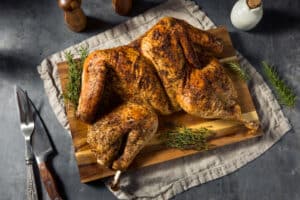
Spatchcocked.
Also known as butterflied, the spatchcocked method flattens the bird to cook faster and more evenly, and to finish with a crisp. To learn more about how to spatchcock a bird successfully, read up here. The basics involve removing the backbone using sharp kitchen shears, a large pan, and a little resolve. The name alone should be good dinner conversation fodder.
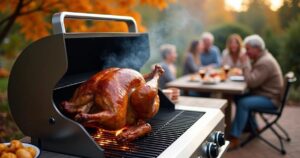
Grilled.
Fire up the grill for outdoor oven options, which also frees up the kitchen. The key to grilling a turkey is indirect heat—place the fire on the sides of the bird rather than underneath. Monitor the grill temperature, and if you want a little smoky flavor, add wood chips. For grilling tips, visit Butterball’s grilled whole turkey recipe.
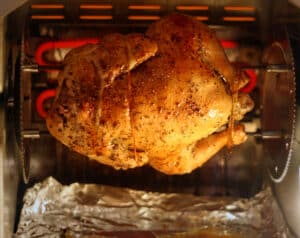
Rotisserie roasted.
Cooking the whole turkey by rotating the bird ensures an evenly browned, golden turkey. It’s impressive, but balance and equipment capacity matter. Butterball’s whole-turkey guide limits birds to 12 pounds or less. Check your rotisserie’s limits and learn how to roast it successfully.
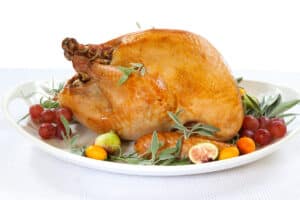
Brined and roasted.
If you like locking in moisture and don’t mind a bit of pre-Thanksgiving prep, brining and then using your favorite roasting method is for you. This method uses a salt-water brine or buttermilk soak, then rests in the fridge for several hours to overnight before roasting. Check the label of your turkey before adding salt to a bird already treated with a salt solution.
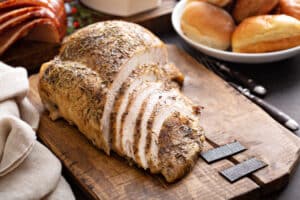
Turkey breast only.
If you’re planning a smaller gathering, you may want a smaller roast—less carving, fewer leftovers, and no drumstick or wishbone negotiations. Check whether your cut is bone-in or boneless, and review Butterball’s turkey breast roasting instructions for the best results.
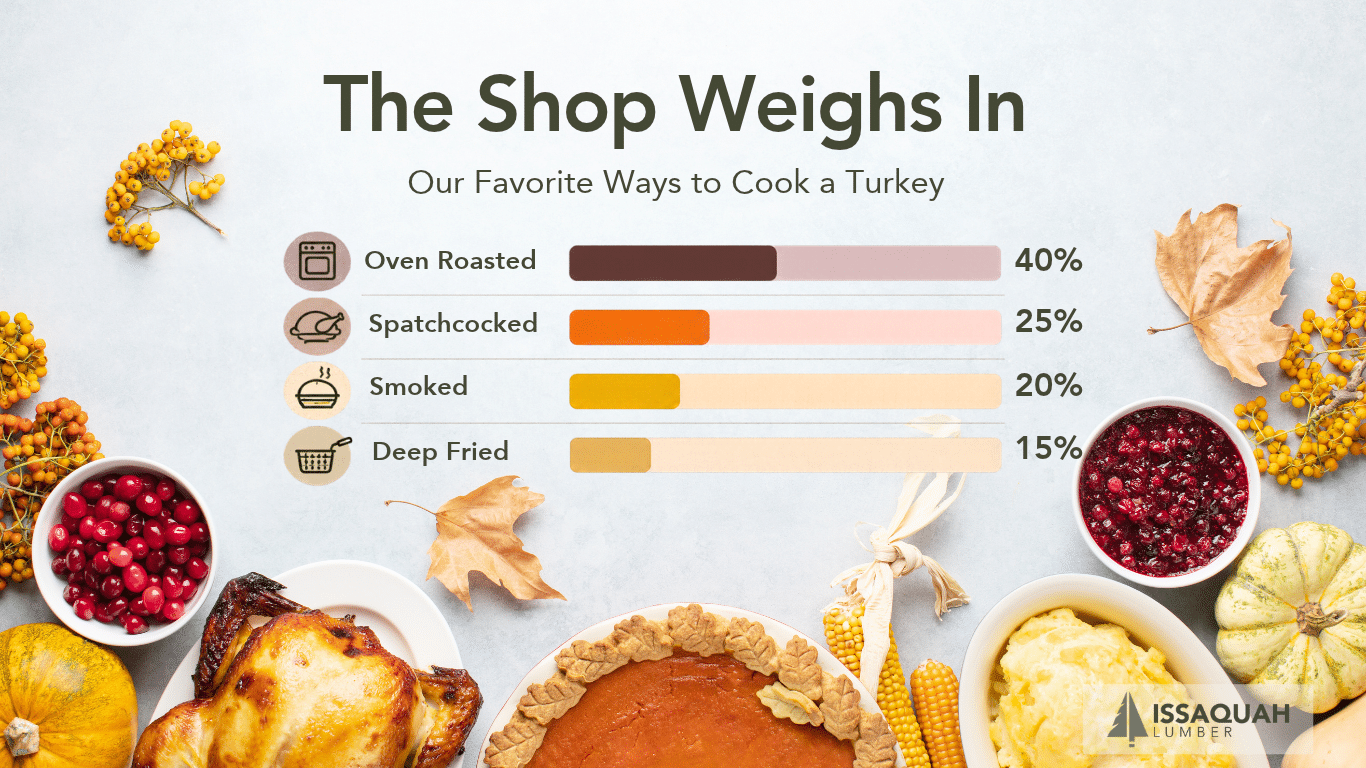
Not sure which method to use yet. We asked our team: which method deserves a place at the Thanksgiving table? And which side dish is worth defending?
A Little Something on the Side: Timber & Thyme Stuffing
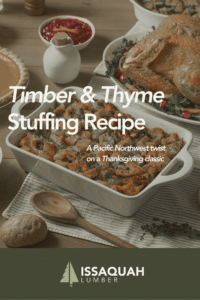
No Thanksgiving table is complete without a good stuffing, and we’re throwing our recipe into the mix. Our Timber & Thyme Stuffing puts a Pacific Northwest twist on the holiday classic with rustic sourdough, Washington apples, mushrooms, and fresh herbs. It’s a little savory, a little sweet, and might just earn a permanent place at your Thanksgiving table.
Click the image below to download the recipe booklet. Give it a try and let us know what you think. We’d love to hear if you make it for your Thanksgiving holiday and any twist you made to make it your own.
a